
First Signs of Pregnancy: What early indicators can suggest a pregnancy?
First signs of pregnancy: When your body gives subtle hints
Maybe it's just a feeling. Maybe you're suddenly more tired than usual, your breasts are tender, or certain smells are much more intense. Many women feel very early on that something is changing – sometimes even before their period is due.
However, the first signs of pregnancy are very individual. Some women notice a change almost immediately, while others have hardly any symptoms for weeks. Both can be completely normal. In this article, you'll learn about early signs that may indicate a pregnancy, when they can appear, and when a pregnancy test is advisable.
When can the first signs of pregnancy appear?
The first signs of pregnancy can appear just a few days after implantation. More often, however, they become noticeable around the time your period would normally start.
Important: Many early symptoms resemble classic PMS complaints. Breast tenderness, fatigue, abdominal cramping, or mood swings can occur both before your period and at the beginning of a pregnancy. Therefore, a pregnancy test is the safest way to get certainty.
The most common first signs of pregnancy
1. Missed period
For many women, a missed period is the first clear sign of pregnancy. Especially if your cycle is usually regular, a missed period can be a strong indication.
However: Stress, travel, hormonal fluctuations, breastfeeding, or changes in daily life can also affect your cycle. So here too: A test will provide more clarity.
2. Sensitive or tender breasts
Many women notice very early on that their breasts become more sensitive. They can feel tender, heavier, or more sensitive to touch. The nipples can also be more sensitive than usual.
The reason for this is hormonal changes that prepare the body for pregnancy right from the start.
3. Fatigue and exhaustion
Are you suddenly much more tired in the evening? Or do you feel exhausted in the morning, even though you've had enough sleep? Severe fatigue is one of the most common early signs of pregnancy.
Especially in the first few weeks, your body is working overtime. Your hormone balance changes, your circulation adjusts, and your body begins to create optimal conditions for the baby.
4. Nausea – not just in the morning
Nausea is often referred to as "morning sickness" but can occur at any time of day. Some women only feel a slight queasy sensation in their stomach, others suddenly react sensitively to certain foods or smells.
For many, nausea begins around the 4th to 6th week of pregnancy. However, it can also appear earlier or later – or not at all.
5. Abdominal cramping
A slight pulling, pressure, or cramping sensation in the lower abdomen can also be among the early signs of pregnancy. It often feels similar to just before your period.
This can be unsettling, but in many cases, it's normal: The uterus changes, blood flow increases, and the body adjusts to pregnancy.
If the pain is severe, occurs on one side, or is accompanied by heavier bleeding, you should have it checked by a doctor.
6. Frequent urination
Even in early pregnancy, you may find yourself needing to use the restroom more often. Hormonal changes and increased blood flow can cause the bladder to react more quickly.
Even if the baby bump isn't visible yet, a lot is already happening in your body.
7. Sensitivity to smells and altered taste
Does coffee suddenly smell unpleasant? Does your favorite food taste different? Or do you have a metallic taste in your mouth?
Many pregnant women report an altered perception of smells and taste in the first few weeks. Sudden aversions to certain foods or new cravings can also occur.
8. Light spotting
Some women notice light bleeding or spotting around the time of implantation. This so-called implantation bleeding is usually very light and significantly shorter than a normal period.
Nevertheless: Bleeding during pregnancy should always be observed carefully. If there is uncertainty, pain, or heavier bleeding, a medical examination is advisable.
9. Mood swings
Overjoyed one moment and close to tears the next? Emotional changes can also be an early sign of pregnancy.
Hormonal changes can affect mood, sleep, energy, and sensitivity. Especially in the beginning, it's completely normal if you feel a little "different" internally.
Am I pregnant despite a lack of symptoms?
Yes, that's possible. Not every woman experiences early signs of pregnancy. Some only realize they are pregnant after a positive test or their first doctor's appointment.
A lack of symptoms does not automatically mean that something is wrong. Every pregnancy is different – even for the same woman, each pregnancy can feel different.
Pregnancy symptoms or PMS?
Many early pregnancy signs resemble PMS symptoms. These include:
-
Breast tenderness
-
Fatigue
-
Abdominal cramping
-
Mood swings
-
Cravings
-
Headaches
-
Bloating
The most important difference is often a missed period. However, this may not always be clear, especially with an irregular cycle. Therefore, a pregnancy test is the safest next step.
When is a pregnancy test advisable?
A pregnancy test measures the hormone hCG, which the body produces after implantation. Many tests can provide a reliable result from the day your period is due. Early tests can sometimes show a result a few days earlier, but they are less reliable.
If the test is negative but your period is still missed, you can test again after a few days or contact your gynecologist's office.
When should you seek medical advice?
Please have symptoms checked by a doctor if you have:
-
severe or unilateral abdominal pain
-
notice heavy bleeding
-
are persistently vomiting heavily and can hardly keep any fluids down
-
have a fever, dizziness, or severe circulatory problems
-
have a very uneasy feeling
Uncertainty is quite normal, especially in early pregnancy. It's better to ask one more time than to ponder too long.
What to do if the test is positive
A positive pregnancy test is often a huge moment – full of joy, excitement, questions, and perhaps also uncertainty. Now you can make an appointment with your gynecologist's office and gradually prepare for the time ahead.
Many expectant parents now begin to deal with topics such as nutrition, sleep, initial equipment, birth, and closeness in the postpartum period. However, not everything has to be perfectly planned right at the beginning. You are allowed to arrive. Breathe. Be happy. And accompany your body at its own pace.
Closeness from the start: Why many parents consider baby carriers early on
Even when your baby is still tiny, many parents begin to imagine what life with a baby will feel like during pregnancy. Closeness, security, and free hands play a big role in this.
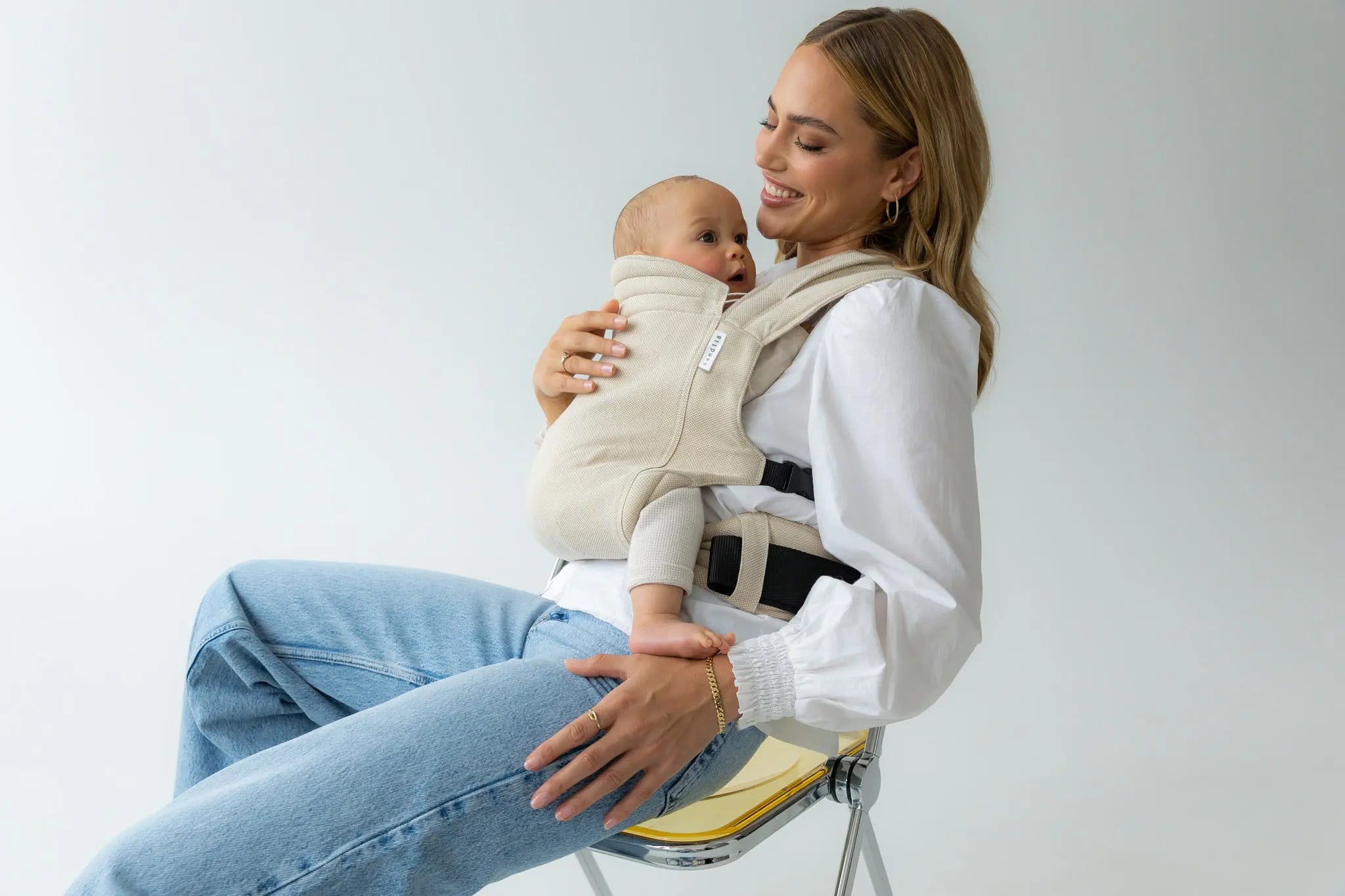
A baby carrier can help you carry your baby close to you after birth and at the same time remain mobile in everyday life. Especially in the first few months, many babies love the familiar closeness, heartbeat, and warmth of their parents.
At sandiia, we develop baby carriers that combine security, comfort, and modern design – for the first few weeks, babyhood, and many small everyday moments full of closeness.
Conclusion: First signs of pregnancy are individual
The first signs of pregnancy can be very different. Some women experience early fatigue, breast tenderness, or nausea. Others have hardly any symptoms. The most important early sign is usually a missed period – but it only becomes truly certain with a pregnancy test.
Listen to your body, take your time, and seek medical advice if you are unsure. A pregnancy doesn't always begin with a clear sign – sometimes it begins very quietly.
FAQ: First signs of pregnancy
What are the very first signs of pregnancy?
The most common early signs of pregnancy include a missed period, sensitive breasts, fatigue, nausea, abdominal cramping, frequent urination, and altered sense of smell or taste.
Can you tell you're pregnant before your period is due?
Yes, some women notice changes before their period is due. However, these symptoms are not definitive, as they can resemble PMS.
Is nausea always a sign of pregnancy?
Nausea can be an early sign of pregnancy, but it doesn't have to occur. Some pregnant women experience severe nausea, others none at all.
Can you be pregnant without symptoms?
Yes. A pregnancy can also occur without clear early symptoms. A lack of symptoms is not automatically a cause for concern.
When should I take a pregnancy test?
A pregnancy test is most reliable from the day your period is due. If the test is negative and your period is still missed, you can test again after a few days.
Are mild abdominal pains normal at the beginning?
A slight pulling sensation in the lower abdomen can occur in early pregnancy. However, severe, unilateral, or persistent pain should be medically investigated.
When should I see a doctor about early pregnancy signs?
If the test is positive, you can make an appointment with your gynecologist's office. If you experience severe pain, bleeding, severe vomiting, or great uncertainty, you should seek medical advice sooner.