Baby Sleep: What's Really Important
Countless tips, opinions, and expectations circulate regarding baby sleep. The baby should ideally fall asleep alone, not sleep too late, not sleep too much during the day, but also not too little. For many parents, this quickly feels overwhelming.
The good news: baby sleep doesn't have to be perfect. It's not about adhering to rigid rules, but about understanding the basics that help your baby find peace.
Sleep is Development, Not Performance
Baby sleep is not a training goal. It develops over time and depends on many factors: age, temperament, maturity, daily routine, needs, and closeness. Some babies fall asleep quickly and easily, others need a lot of support. Both can be completely normal.
It's important not to view sleep as something a baby "has to be able to do." Falling asleep is a process of letting go for many babies—and for that, they need security.
Security and Closeness are Key
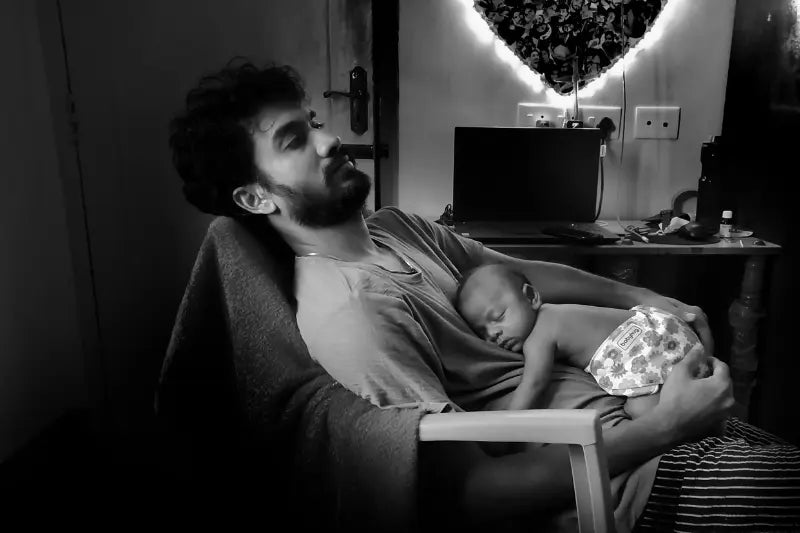
Many babies fall asleep best when they feel close. This can be in your arms, in a baby carrier, while cuddling, or in a family bed as part of your informed sleep situation. Closeness is not a "bad habit," but a basic need.
Especially in the first few months, physical contact helps regulate the nervous system. The baby feels held, secure, and accompanied.
Recognizing Tiredness Cues
A common reason for restless falling asleep is not just too little sleep, but also overtiredness. When babies are awake for too long, winding down often becomes more difficult.
Signs of tiredness can include:
- Looking away
- Yawning
- Rubbing eyes
- Restlessness
- Fussing
- Increased clinging
Those who recognize these signals in time can often make falling asleep much more relaxed.
Routines Provide Orientation
Babies love repetition. A simple, recurring routine helps them better understand the transition from active wakefulness to rest. The routine doesn't have to be long or complicated.
Often, just a few steps are enough, such as:
fresh diaper, sleeping bag, quiet room, soft words, carrying or cuddling.
What matters is not perfection, but reliability.
The Environment Can Be Quiet
Babies don't have to sleep in absolute silence, but too many stimuli can make falling asleep difficult. Dimmed lights, a calm atmosphere, and as little hectic change as possible help many children.
Parents can also ask themselves: Is my baby really tired right now—or does it perhaps still need closeness, relief, or regulation?
What's truly important for baby sleep is often much simpler than imagined: closeness, security, appropriate sleep windows, a calm environment, and loving support. Not every night will be the same, and not every evening will be relaxed. But if the foundation is right, sleep can gradually become easier.