
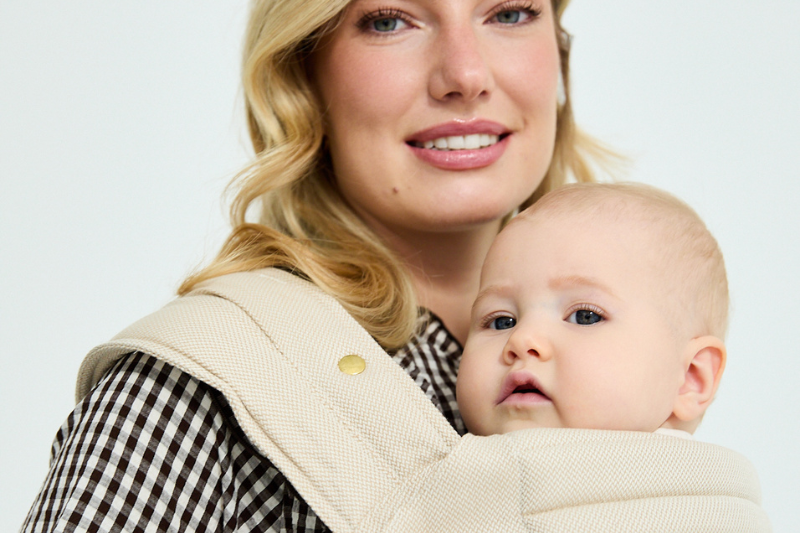
Baby Carrier Guide: Finding the Right sandiia® Baby Carrier for Your Everyday Life
A good baby carrier provides noticeable relief in everyday life, but only if it suits the child, your body, and your usage needs. Some families need a quick system for the trip to daycare, while others are looking for something for long walks or quiet hours at home. This is where not only the price matters, but above all, comfort, ease of use, and the right fit. The following guide categorizes the most important carrying systems, explains ergonomic basics, and shows you how to find the right solution for babies and toddlers with sandiia® baby carriers. If you are still unsure after reading, our quiz on finding the right baby carrier can also help you.
Baby Carriers: Which Carrier Suits You?
The best baby carrier is rarely the one with the most features, but rather the one that is actually used in daily life. Those who only carry for short periods primarily look for quick donning and easy adjustability. For longer journeys, carrying comfort, sturdy straps, and a good back panel matter significantly more. The child's age also changes the requirements: newborns need a lot of closeness and support, older babies and toddlers need more weight distribution and freedom of movement. Personal carrying preference is equally important, as some parents prefer a rather firm system, while others prefer something soft and flexible.
It is precisely according to this principle that we have structured our sandiia® product range: the Newborncarrier "Cocoon" for the first few months, our Fullbuckle Baby Carrier Tiimeless Comfort+ for uncomplicated carrying from birth up to 15 kg, the Halfbuckle Babycarrier for those who like the baby wrap look, the Toddlercarrier "Tiimeless" for toddler age, and our Hip Carrier "Hipster" for short, spontaneous trips. For short trips within the home or to the car, an uncomplicated model like the Hipster is often sufficient. For longer walks, an ergonomic solution with padded shoulder straps like our Tiimeless is worthwhile, and at home, a carrier that is quick to put on and leaves your hands free is a winner.
What a Baby Carrier Should Do in Everyday Life
At its core, a baby carrier should keep the child close to the body while freeing up both hands. This exact combination makes it so practical in family life: shopping, cooking, opening doors, or accompanying a sibling is significantly easier. For this to work well, the child's weight must be distributed sensibly. Shoulders, hips, and back should be relieved, instead of everything pulling in one place. A good hip belt and sturdy shoulder straps are therefore more than just comfort details – that's why our sandiia® baby carriers have extra soft padding on the hip belt and shoulder straps.
Equally important are safety and stability, because the carrier should sit securely even when moving and not constantly require readjustment. Uncomplicated operation is also part of it, because complicated fasteners quickly become annoying in everyday life – that's why our Tiimeless models use self-guiding magnetic buckles that automatically align and click into place. As a supplement to the stroller, a baby carrier is particularly practical when stairs, narrow paths, or restless moments are at hand. In some situations, it even replaces the stroller completely, for example for short errands or for babies who need a lot of physical contact on the go – you can find more about this in our FAQ on frequently asked questions.
Baby Carrier or Baby Wrap: The Most Important Differences
Baby wraps and baby carriers pursue the same goal but achieve it differently. A classic baby wrap is tied around the body, adapting very precisely to the baby and the wearer. A baby carrier, on the other hand, comes with pre-formed elements such as a hip belt, shoulder straps, and often an adjustable panel. This makes getting started easier because less tying and adjusting is required. With a wrap, the learning curve is higher, but the sitting position can be adjusted very finely.
Precisely for this reason, we at sandiia® have deliberately opted for pure buckle systems: for spontaneous use, many parents prefer a buckle carrier, such as our Fullbuckle baby carrier Tiimeless. Those who love the wrap look and the close carrying feeling but don't want to tie will find the right balance with our Halfbuckle Babycarrier – it offers you all the advantages of wrap comfort, but without the stress of tying. Typically: the fullbuckle carrier for uncomplicated routines, the halfbuckle carrier for those who like the wrap look but prefer to work with a buckle.
When Can Babies Be Placed in a Baby Carrier?
Carrying is generally possible from birth if the system is suitable for newborns and correctly adjusted. Especially in the first few weeks, head support, body closeness, and a supportive shape are particularly important. The baby should sit snugly enough to ensure good back and head support. It is also important that the airways remain clear and the chin does not fall onto the chest. It was precisely for this phase that we developed our Newborncarrier "Cocoon" – you can read more about this in our article Baby Carrier for Newborns – Security from the Start and The Newborn Baby Carrier "Cocoon" – an Ideal Companion During the Postpartum Period.
Many parents initially use the front-carry position because they can observe the child well and direct contact is maintained. Later, other carrying positions become interesting, such as on the back as soon as the child weighs more and can sit independently (more on this in Carrying Babies on Your Back – Freedom and Closeness with the Sandiia Baby Carrier), or on the hip for short trips with our Hipster. We explain in detail when the front-facing position makes sense in When can I carry my baby facing forward? – A guide for safe carrying. If you are unsure, it is advisable to consult a midwife or carrying consultant, especially when it comes to special needs, prematurity, or uncertainties about the position – our freelance carrying consultants are available to help you with a free online carrying consultation worth €50.
Understanding Ergonomics: Properly Implementing the "M" Position
The "M" position (also known as the "spread-squat position" or "frog-leg position") is the benchmark against which a good baby carrier should be measured. In this position, the child's legs are slightly squatted, the knees are higher than the bottom, and the thighs are broadly supported. This posture supports the healthy development of the hips because it adopts the baby's natural position instead of letting the legs hang down. The panel plays a central role here: it should be adjusted so that it extends from knee-to-knee without pressing. The back panel also shapes the posture by supporting the upper body and preventing excessive slumping.
A good seat provides the child with support without restricting the abdomen – this is precisely what we ensure with every sandiia® baby carrier. In everyday life, the M-position is recognizable by the fact that the knees are visibly squatted and the bottom sits slightly lower. Too much pressure on the legs, a too-narrow panel, or dangling legs are warning signs. For babies from birth, gentle support is particularly important so that they can be carried in a natural, stable position. We explain in detail how to reliably implement this posture in everyday life in Ergonomic Carrying – Safety and Comfort for Parents and Baby and in our warnings for baby carriers.
Baby Carriers Compared: What Carrying Systems Are There?
When comparing carrying systems, it's worth looking at their construction and suitability for everyday use. Full buckle carriers rely entirely on buckles and adjustable straps, making them quick to put on and usually very beginner-friendly – like our Tiimeless Fullbuckle. Half buckle carriers combine a fixed hip belt with tied shoulder straps and often feel very close to the body – that's what our Halfbuckle Babycarrier stands for. Then there's the classic woven wrap, which offers the greatest flexibility but also requires the most practice; at sandiia®, we have deliberately specialized in the two buckle-based systems because they provide a quicker and safer fit for parents with children in everyday life.
For parents who want to start without complications, the full buckle version is often the most obvious choice. Those who place great importance on individual adjustment and a baby wrap feeling will rather look at our Halfbuckle models. The key factors are ease of use, adjustability, and carrying comfort. Your own usage profile also plays a role: those who frequently switch between multiple people benefit from a continuously adjustable solution like the Tiimeless.
| System | Strength | Typical Disadvantage |
|---|---|---|
| Full Buckle Carrier (sandiia® Tiimeless Fullbuckle) | quick, easy, suitable for everyday use | less flexible than a wrap |
| Half Buckle Carrier (sandiia® Halfbuckle) | close to the body, individual | more practice than full buckles |
| Baby wrap | maximally adjustable | more complex to put on, not part of the sandiia® range |
Full Buckle Carrier: Quick and Uncomplicated
The classic full buckle carrier usually consists of a hip belt and shoulder straps that are closed with buckles. This precise construction makes it so popular in everyday life: once adjusted, it's quick to put on and go. For families with little time, for trips to daycare, or for parents who are often out alone, this is a real plus. However, a good carrier of this type should not only be simple but also carry well.
Our sandiia® Tiimeless Comfort+ is developed precisely for this requirement: quick donning thanks to self-guiding magnetic buckles, plus extra softly padded elements on the hip belt, leg openings, and head support. It is suitable for babies from 3 to 15 kg and can also be worn on the back once your child can sit independently. Our Step-by-Step Guide for the Baby Carrier shows you how to put it on correctly. You can read more about the magnetic buckle technology in New sandiia Baby Carrier Tiimeless Comfort+: Closeness, Comfort, and Even More Everyday Relief.
Half Buckle Carrier: A Blend of Wrap and Buckles
The half buckle carrier combines a fixed hip belt with soft, tied shoulder straps. The result often feels particularly close to the body and distributes the weight very comfortably when adjusted well. Many parents like this system because it combines some of the flexibility of a wrap with the security of a buckle. The learning curve is usually higher than with pure buckle systems, but significantly lower than with free tying of a woven wrap.
Our sandiia® Halfbuckle Carrier combines precisely this wrap-like appearance with a single buckle in the back or belly area and two long, crossed shoulder straps. A detailed step-by-step guide on how to put on the Halfbuckle Babycarrier can be found on our website, as well as instructional videos for reference.
Baby Wrap: Maximum Adjustment, More Practice
A baby wrap offers the greatest freedom because the fabric is tied around the body depending on the tying technique. This allows it to adapt very well to different body shapes and can be finely adjusted for very small to larger babies. The disadvantage lies in the higher practice requirement and the longer time it takes to put on. For spontaneous situations, many parents therefore prefer a carrier with a buckle. This is precisely why we at sandiia® consciously do not offer a classic tying wrap, but rather a solution with our Halfbuckle Babycarrier that combines the comfort of a wrap with significantly less effort.
Important Purchase Criteria for Baby Carriers
When buying a baby carrier, the details matter more than pretty product pictures. Firstly, the fit must be right, as it determines whether the child sits securely and the wearer is relieved. Secondly, the material is important: breathable fabrics, a pleasant feel on the skin, and robust seams increase everyday usability. Our sandiia® baby carriers are therefore made from 100% certified OekoTex100 GOTS organic cotton – no plastic, no synthetic fibers, free of harmful substances and sustainable. Why this is particularly important for baby carriers is explained in Why you should better not buy a baby carrier made of 3D knit fabric and in Sustainability in baby carriers, towels & diaper bags – what parents should really pay attention to.
Thirdly, it needs good straps and sufficient adjustability so that the carrier can adapt to different body sizes. The child's weight also plays a role, as the demands on stability and comfort increase with growing weight. Those who carry only occasionally may opt for a light, uncomplicated model like the Hipster hip carrier. Those who are out and about daily should rather pay attention to padded support surfaces, clean workmanship, and well-thought-out ergonomics, as offered by our Tiimeless Comfort+. Useful added values are not necessarily fancy extras, but practical things like a padded headrest, an adjustable leg opening, or easy-care fabrics – our baby carriers also come with a dust bag and fit into our Sale & Outlet if you want to look for reduced models.
Shoulder Straps, Hip Belt, and Carrying Comfort
Good shoulder straps and a sturdy hip belt distribute the weight so that the neck and back are not unnecessarily strained. Especially during longer carrying periods, padded shoulder straps become important because they reduce pressure points and balance the child better. Our sandiia® baby carriers also have fan-out shoulder straps: The fabric flexibly adapts to the shoulder area and distributes the weight evenly without stretching out. For even more comfort during longer use, there are also strap covers for baby carriers available as accessories. If your back quickly feels strained during longer carrying, it's also worth taking a look at our article Which baby carrier for back pain?
Materials, Workmanship, and Care
Breathable fabrics quickly make a difference in a baby carrier, especially in summer or when the baby is close to the body. Equally important is clean workmanship with durable seams so that the carrier remains stable even with frequent use. The feel on the skin should be soft without being scratchy – that's why we at sandiia® consistently use GOTS-certified organic cotton instead of synthetic fabrics. Those who want little effort benefit from uncomplicated, easy-care fabrics, as all our models offer.
Adjustability for Babies and Toddlers
Grow-along systems are particularly practical because they fit longer and often cover several developmental stages. Our sandiia® baby carriers can be used as they grow thanks to a detachable headrest: rolled up, it serves as an additional neck support and, for older babies, as an extension of the back panel. Infinitely adjustable is a real advantage here, because fine adjustment is easier and the child is always optimally seated – this is particularly valuable if a model is to be used from the first few months into the toddler range. How long a baby carrier can be usefully used in total is answered in Baby Carriers – How Long is it Useful and Possible?
How to Find the Right Baby Carrier for Your Everyday Life
The best decision is usually not about brands, but about everyday situations. In the city, quick donning, compact dimensions, and a system that remains comfortable even during short breaks are important – our Hipster Hip Carrier is ideal for this. For travel, it's important that the baby carrier is easy to store and quickly adjustable; you can read why our carriers are particularly suitable for this in Why the sandiia® Baby Carrier is Perfect for Travel. For walks, carrying comfort, load distribution, and a stable shape that remains comfortable even after an hour are key – this is where our Tiimeless Fullbuckle excels. At home, above all, it should be uncomplicated, as carrying often happens spontaneously and frequently.
Anyone working with different people needs a carrier with a good adjustment range so that different body sizes don't become a problem – exactly what our continuously adjustable models offer. For on the go, it's also worth checking out our matching diaper bag, which provides additional storage space for diapers, toys, and more. Sometimes the most versatile solution is not the best, but the one that can be put on without thinking. That's often where the biggest everyday gain lies – and that's exactly what we designed our sandiia® carriers for.
For Newborns and Babies from Birth
For babies from birth, closeness, head support, and a supportive shape are paramount. Our Newborncarrier "Cocoon" can be adjusted small enough and positions the child so that they sit securely and snugly against the body. Especially in the first few weeks, a particularly fine adjustment is worthwhile so that nothing presses and the posture is correct – you can find the corresponding Step-by-Step Guide for the Cocoon directly on our website. Buying too large or adjusting too roughly here risks unnecessary frustration. An early, secure model often saves a switch later and avoids bad purchases – you can also find background information on this in Which baby carrier is best for newborns without an insert?
For Babies and Toddlers with More Weight
With increasing weight, the demands on the carrier significantly rise. Then carrying comfort, durable straps, and a stable back section become more important than a particularly minimalist design. Longer carrying phases also play a greater role now because heavier children demand more from the body. For babies and toddlers, our Toddlercarrier "Tiimeless" for 18 months to 4 years is suitable, designed for good load distribution and ample room to grow with. If you want to use it for a long time, you should pay attention to robust construction and good adjustability, as our Tiimeless models offer up to 15 kg.
Properly Donning and Using Baby Carriers
Before putting it on, the baby carrier should be fully opened and prepared for your own body size. Then, first the belt, then the seat, only after that are the fine adjustments made. The child is positioned so that they sit close enough to the body and their back does not sag. Typical mistakes are too loose straps, a baby sitting too low, or a seat that is adjusted too narrow. A twisted strap or an uneven position will also quickly make themselves felt through pulling in everyday use.
Ultimately, one thing matters most: secure support and close body contact, without restricting the child. Those who take their time for the initial adjustments will carry much more relaxed later. Our donning videos and step-by-step instructions for back carriers, half-buckle carriers, hipster carriers, and cocoon carriers will guide you step by step. If you are still unsure, you can also use our free online carrying consultation. For many parents, this is precisely the moment when a good sandiia® solution differs from one that is only theoretically suitable.
Carrying Positions: Front, Back, and Hip
Carrying on the front is usually the most common, as eye contact is good and the baby stays close – you can read when this position is exactly safe in When can I carry my baby facing forward? Carrying on the back becomes interesting for many families when the child gets heavier and the front load is noticeable; more on this in Carrying babies on your back – freedom and closeness with the sandiia baby carrier. On the hip, the focus is more on quick, short carrying periods with more mobility – exactly what we developed our Hipster Hip Carrier for.
Each position has its own use: front for closeness, back for relief, side for flexible everyday moments. For longer distances, back or well-adjusted front positions are often more comfortable than a loose hip carry. It is important that the chosen carrying position not only appears practical but also remains stable and comfortable.
Practical Tips for Safe and Comfortable Carrying
The carrier should fit snugly without pressing, and the child must always have clear airways. A quick seat check before setting off prevents many everyday problems – our warnings for baby carriers summarize the most important safety points. Equally helpful are breaks, weather protection (our all-weather cover is suitable for this), and paying attention to the child's signals, such as restlessness or slumping. Even if your baby falls asleep in the carrier, there are a few things to consider – you can find answers to this in Can I sit down if my baby is sleeping in the carrier? Those who regularly re-tighten and check the fit usually carry more relaxed. Small corrections often make the biggest difference.
Baby Carrier Test and Recommendations: What to Look for in Comparisons
Test reports are particularly useful if they don't just give grades but explain why a model convinces or falters. In good comparisons, ergonomics, material, price, and ease of use usually play the biggest role. These factors are precisely what determine in everyday life whether a baby carrier is used frequently or ends up in the closet. Therefore, when reading comparisons, one should focus less on the pure ranking and more on one's own requirements.
Our sandiia® Baby Carrier Tiimeless also had to meet this standard: 95% of midwives surveyed recommend it, as we show in 95% of midwives recommend our sandiia® Baby Carrier Tiimeless! The FAZ Kaufkompass also took a closer look at our Fullbuckle carrier – you can read the results in FAZ Kaufkompass recommends sandiia® Fullbuckle Baby Carrier. A model can score very well in a test and still be unsuitable for one's own body or the child's planned age. Stiftung Warentest is also often sought as a guide, but even good laboratory values do not replace a personal fit. We explain in detail why our carriers are still particularly popular with parents in The best baby carrier from sandiia® – why our carriers are so popular! In the end, the baby carrier that reliably works in your everyday life is what counts.
Price, Quality and the Best Price-Performance Ratio
Inexpensive models can certainly be sensible if they fit well and offer the most important functions. Higher-priced baby carriers often offer more adjustability, better materials, or more comfortable padding. The price usually increases where workmanship, fabric quality, and comfort details become more elaborate. However, expensive does not automatically mean better. If you are wisely budgeting, you should rather ask how often and for how long it will be used.
For occasional use, a simpler model like our Hipster hip carrier may suffice; for daily use, a higher-quality solution with more reserves, like our Tiimeless Comfort+, is often worthwhile. You can also find discounted models and special conditions clearly arranged in our Sale & Outlet.
Frequently Asked Questions About Baby Carriers
Many parents primarily want to know three things: When can it be used, how comfortable is it really, and how do you recognize the right fit? Generally, baby carriers can be used from birth if they are properly adjusted and the baby is well supported – as with our Newborncarrier "Cocoon". Compared to a baby wrap, our buckle systems usually offer an easier entry, while a classic wrap allows for more customization but requires significantly more practice.
A good fit is evident when the child sits securely, their legs are properly squatted, and the person carrying them feels no uneven pressure points. If a carrier already pulls after ten minutes or the baby constantly sags, it usually doesn't fit optimally. You can find more answers in our detailed FAQ or personally in our free carrying consultation. For practical purposes, therefore: it's better to choose carefully than to struggle with an unsuitable model later – and if in doubt, simply use our quiz for the right baby carrier.